
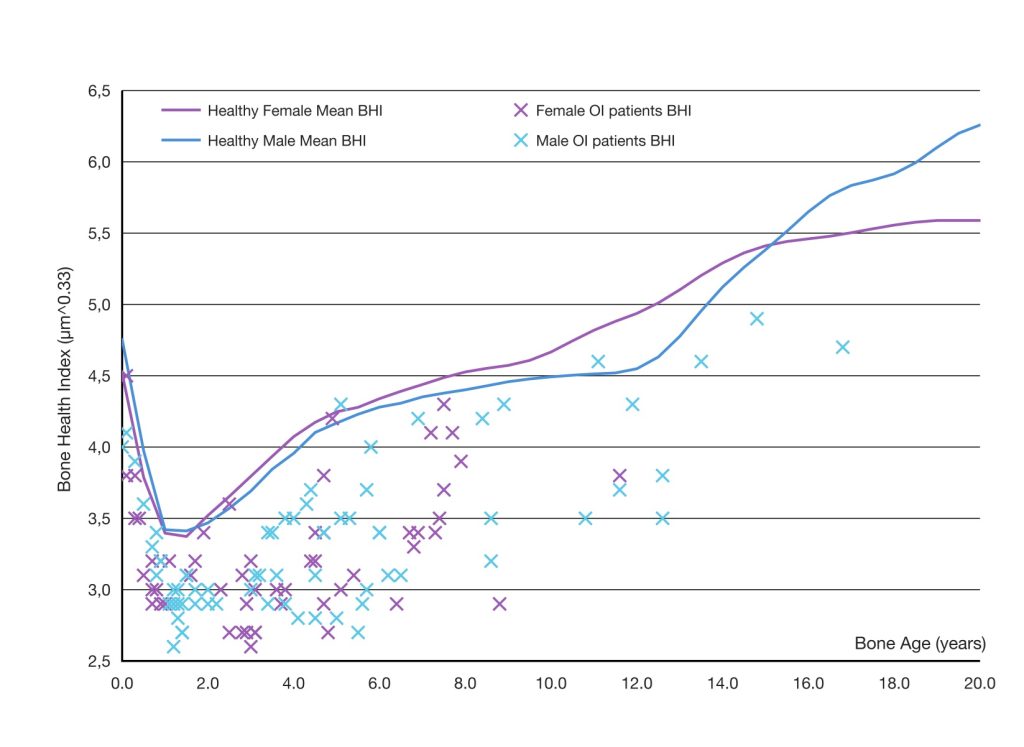
Bone Health Index (BHI) assesses fracture risk in children with Osteogenesis Imperfecta (OI)
A new paper in JCEM by Lanzafame, Calder and collaborators at Great Ormond Street reports a large study aiming to assess fracture risk in children with OI using DXA and BHI:
“Each 1-SD decrease in BHI SDS was independently associated with a 5.3-fold higher odds of incident fracture within two years (OR 5.26, 95% CI 2.4–11.1), while DXA BMD and BMAD Z-scores were not independent predictors.
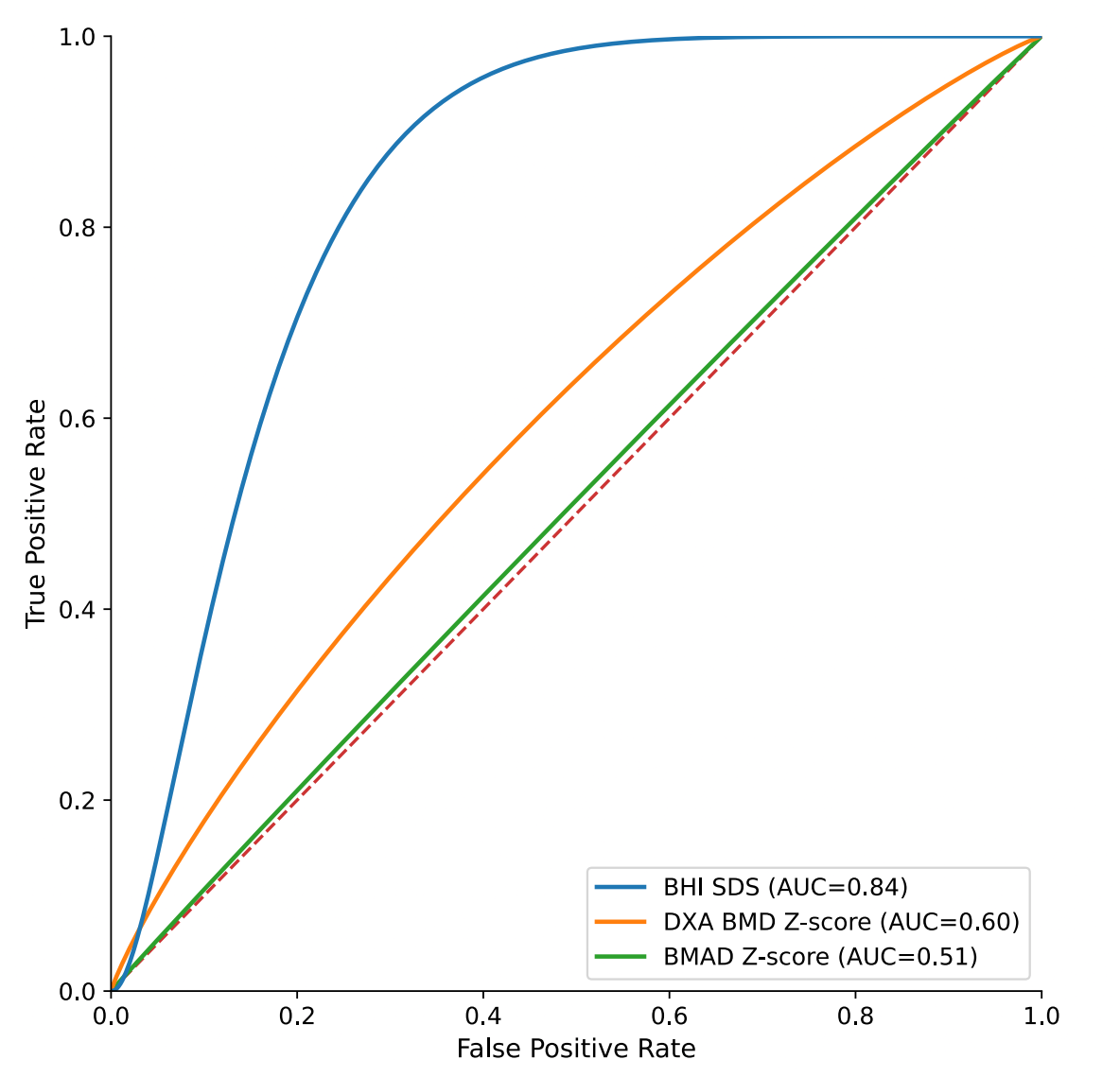
ROC analysis showed good discriminatory performance for BHI SDS (AUC 0.84), superior to DXA BMD Z-score (AUC 0.60) and BMAD Z-score (AUC 0.51).”
The authors conclude:
“Our study indicates that lower BHI SDS values are associated with increased fracture risk in children with classical OI. In the available DXA subgroup, BHI demonstrated stronger discriminatory performance than DXA-derived measures. BHI may represent a clinically useful complementary tool for fracture risk stratification in young children with OI, particularly where DXA is unavailable or technically limited, including infancy.”
This study adds evidence for the clinical benefit of BoneXpert BHI, as summarised in this post