Clinical benefits of BHI supported by 30 publications – new podcast

PubMed search now yields 30 publications on BoneXpert’s Bone Health Index, supporting the clinical benefits of BHI.

While the gold standard for assessing children’s bone health is DEXA BMD (Dual Energy X-ray Absorptiometry Bone Mineral Density), BHI leads to five complementary benefits:

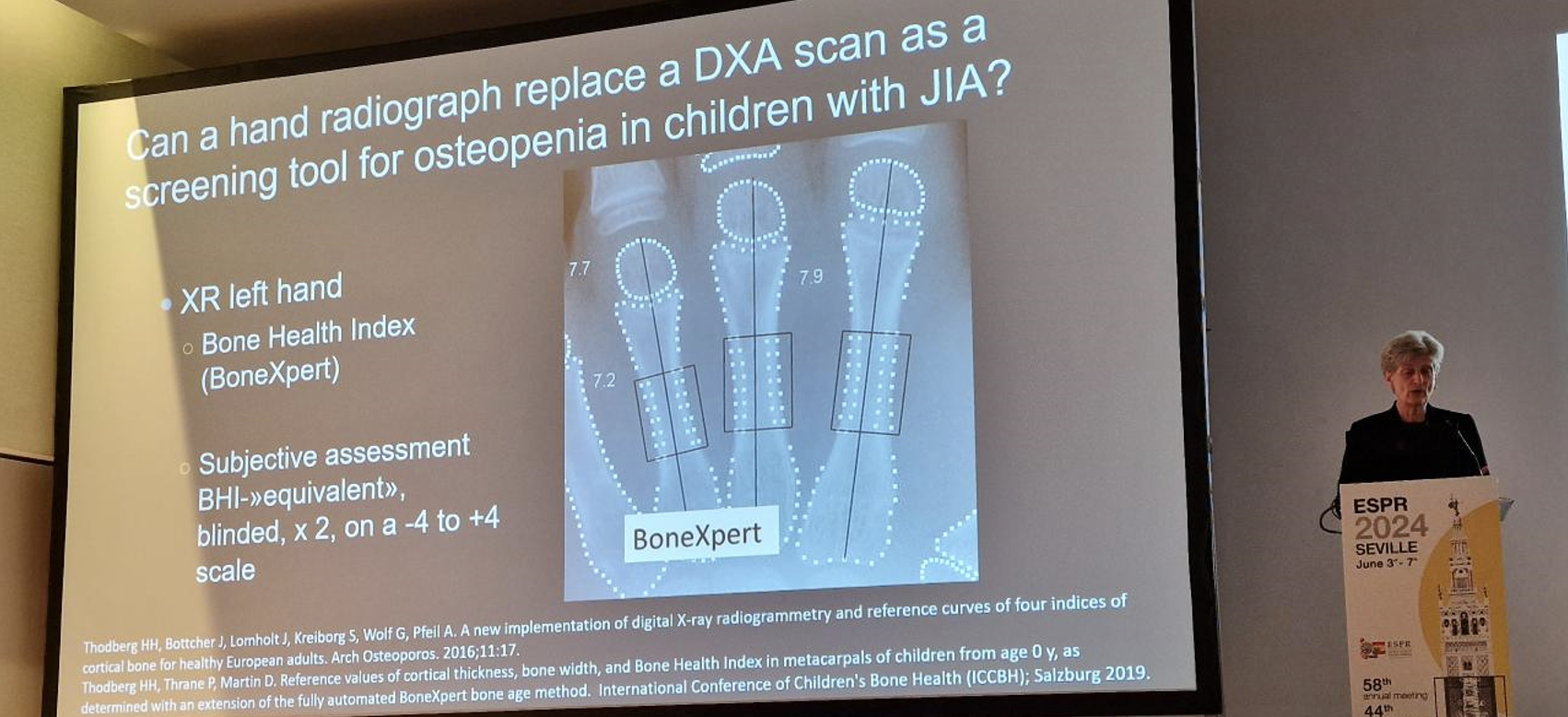
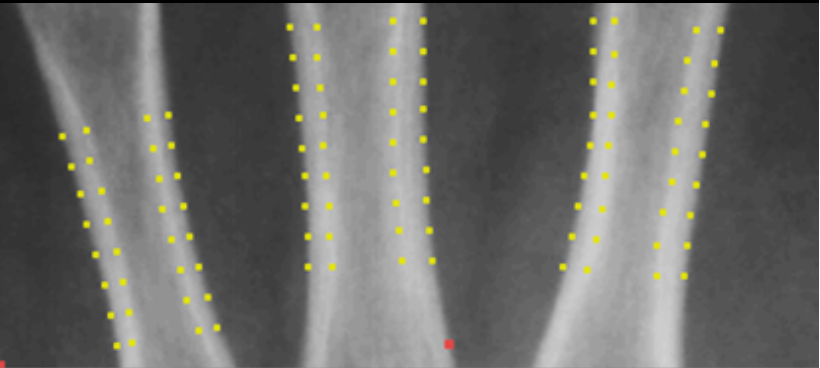
  1. Properly Size-Corrected: The BHI formula was designed from first principles to be intrinsically independent of children’s highly variable bone size, overcoming a major confounding factor that limits the interpretability of DEXA’s areal bone mineral density.
  2. Z-scores by Bone Age: BHI is fully integrated with BoneXpert’s automated bone age determination from the same X-ray, allowing for the calculation of the Z-score (called BHI SDS, Standard Deviation Score) against bone age – a more accurate measure of physiological maturity than chronological age, in particular for children with growth and puberty disorders.
  3. Speed and Availability: As BHI is derived from routine bone age X-rays, it offers an opportunistic, rapid bone health assessment without additional radiation, cost, or patient visits, thereby increasing the frequency of monitoring in at-risk children.
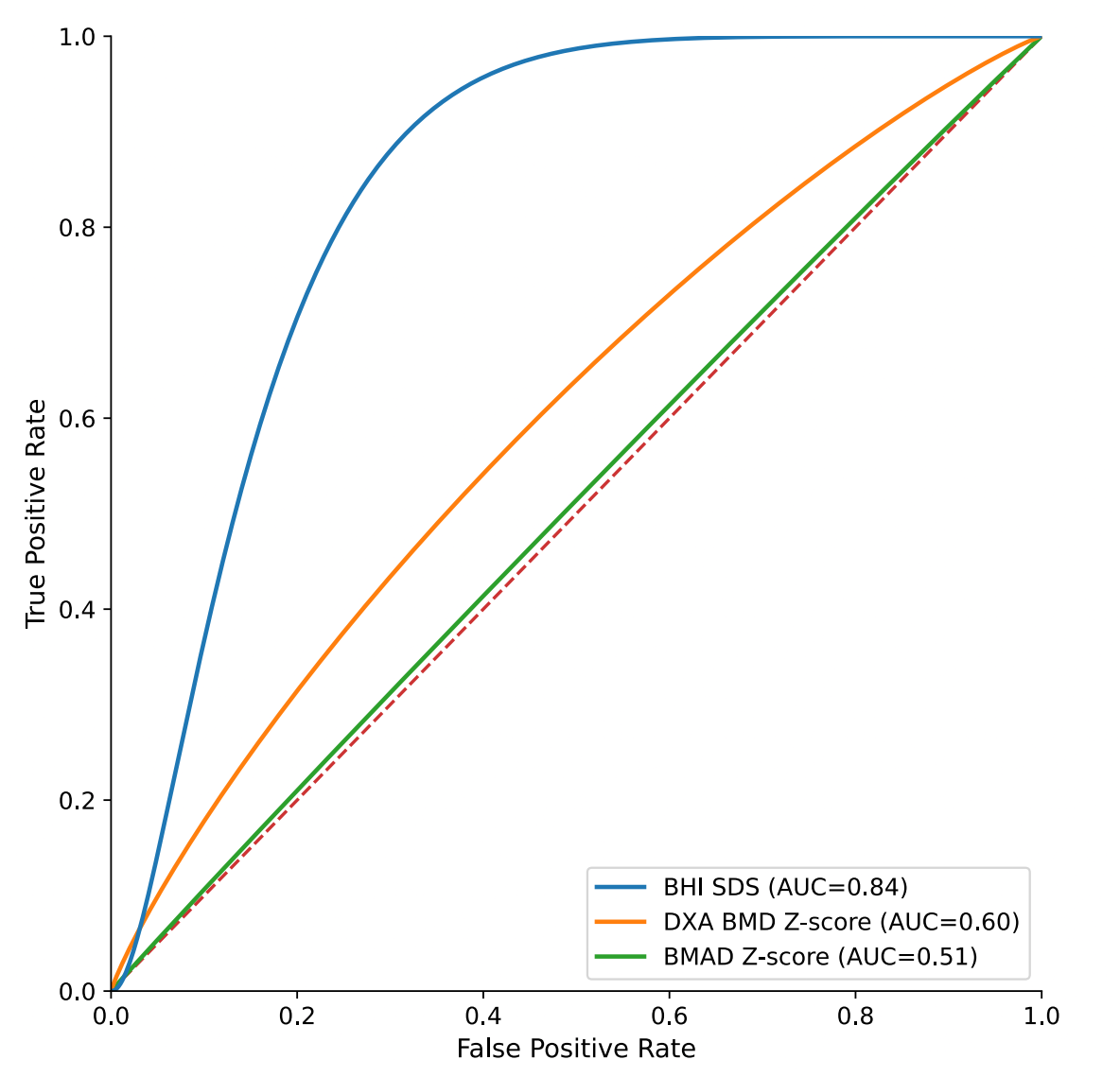
  4. Clinical Validation: BHI SDS correlates with the widely used Height-Adjusted DEXA BMD Z-score (HAZ). And studies have demonstrated that a low BHI SDS is a significant predictor of fractures in high-risk populations, including children with Klinefelter syndrome, chronic inflammatory/disabling conditions and Duchenne muscular dystrophy (DMD).
  5. Unique Applicability: BHI is uniquely applicable in patient populations where DEXA is often impossible or unsafe. This includes children with severe physical disabilities (e.g., DMD, and cerebral palsy) due to positioning challenges and metallic implants, and children under three years of age, for whom BHI provides a sedation-free alternative to DEXA.

This podcast, generated by Notebook LM, unfolds these benefits

0:00
1:03

Study of BHI in children below 2 years with and without Osteogenesis Imperfecta

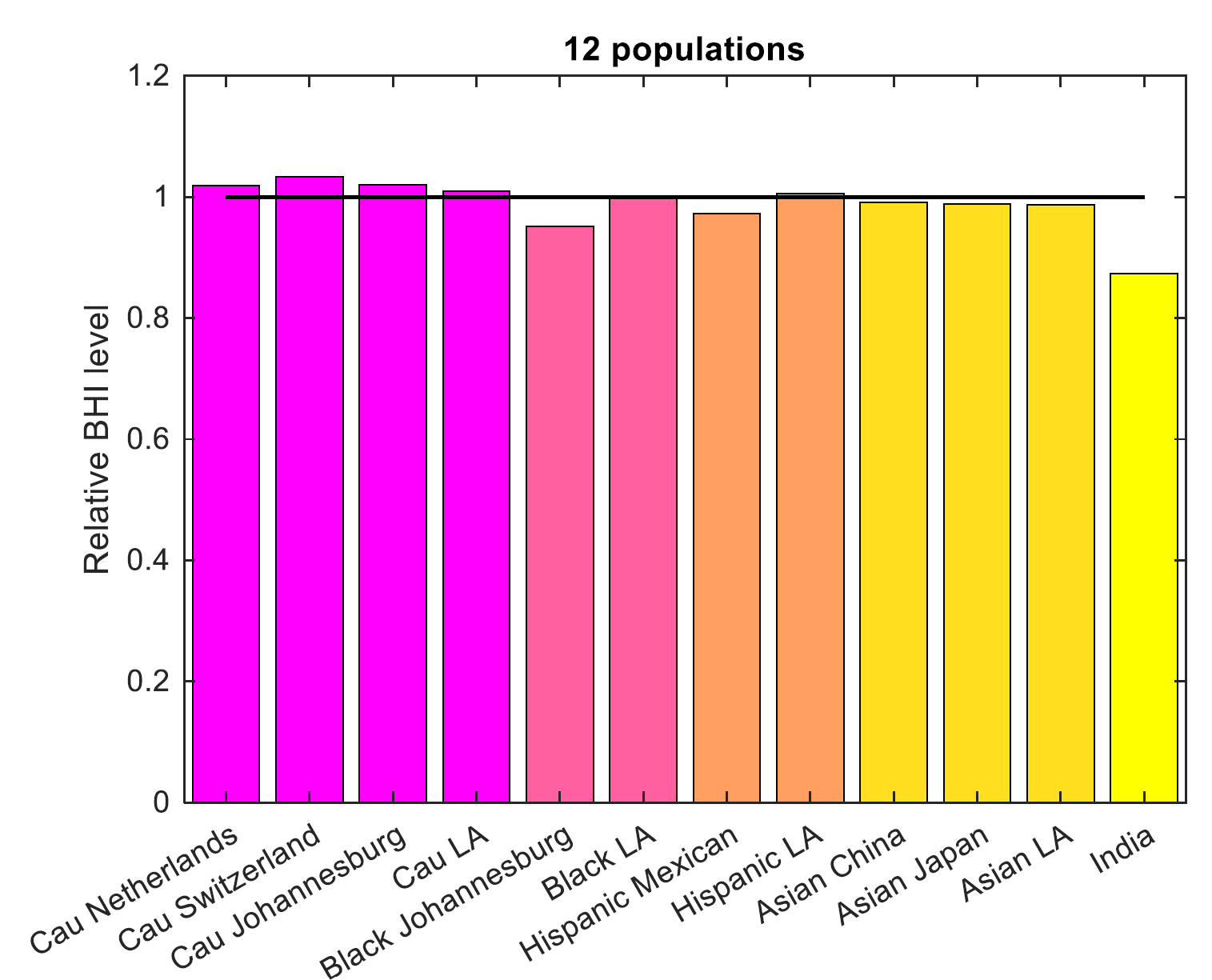
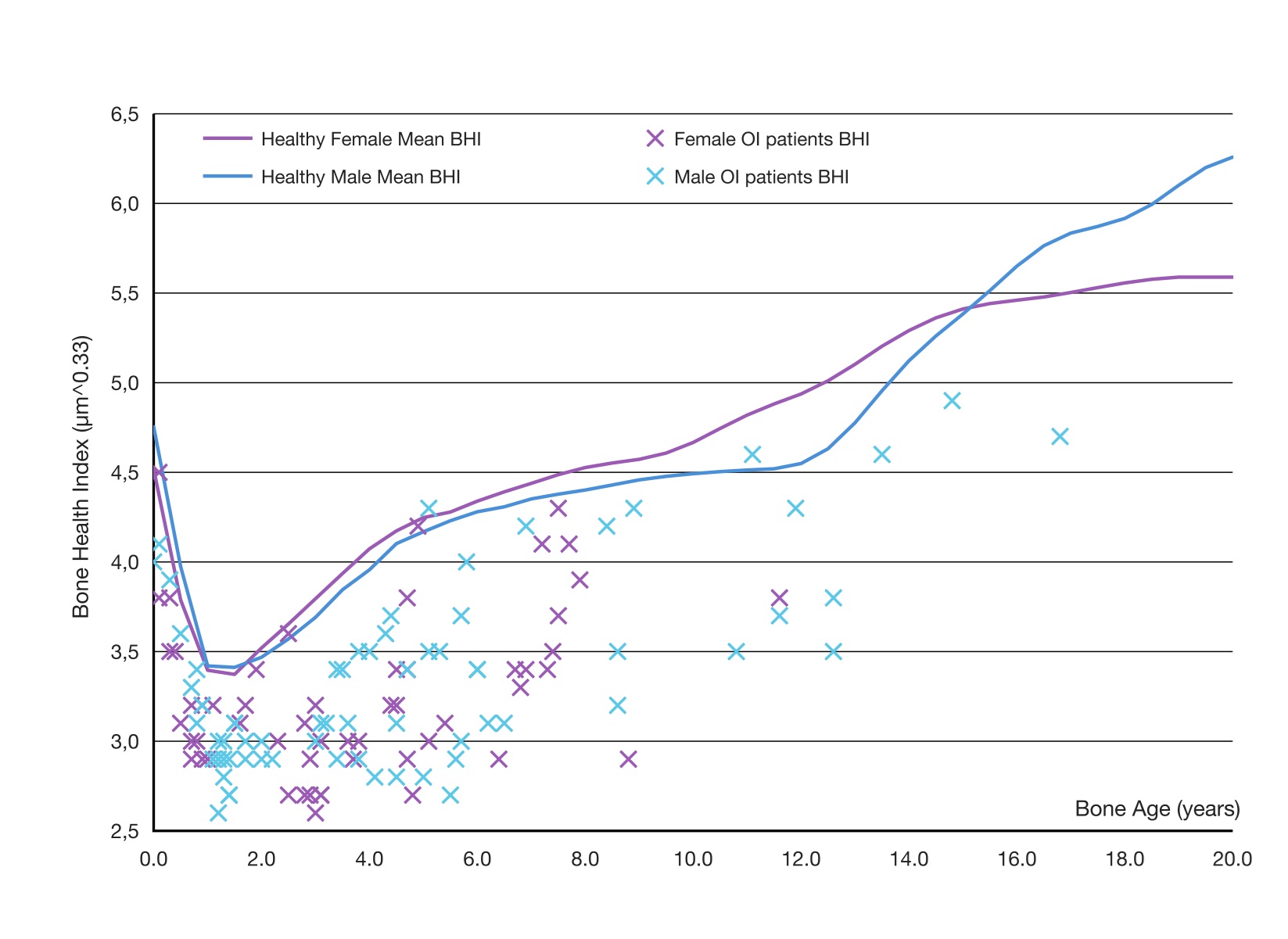
This study has a sinister background: In children below the age of two years with unexplained fractures, it may be difficult to distinguish those with low bone density due to conditions such as osteogenesis imperfecta (OI) from those who have been abused (by violence). Therefore, a new paper by Shalof and Offiah from University of Sheffield and Sheffield Children’s Hospital investigated whether bone health index standard deviation scores (BHI SDS) is sufficiently sensitive to distinguish between children with and without OI. The study included 33 radiographs of children with OI, and 89 of children with suspected abuse and not OI, i.e., normal children. The BHI SDS values of the normal children were compatible with a normal distribution with mean 0 and SD 1, showing that the BHI reference curves in BoneXpert, which were based on children born in 1955 in Paris, are still valid in a modern population. The OI children had a mean BHI SDS = –0.5 and SD around 1.

BHI SDS in boys with Duchenne muscular dystrophy (DMD) is associated with spinal fragility

A new paper by Drs. Phung and Ward from CHEO (Ottawa) reports a study of 54 boys with DMD with BoneXpert. Lateral spine radiographs were evaluated to derive the Spinal Deformity Index, a measure of fragility.

Lower BHI SDS was associated with higher spinal fragility. The authors concluded that BoneXpert provides a rapid method to identify those at greater risk of fracture without the need for additional imaging, and that BoneXpert can assist in identifying patients who may benefit from fracture prevention treatment.

Bone Health Index demonstrates relation to fractures in Klinefelter children

A study published in Journal of the Endocrine Society by Vogiatzi and Ross of Jefferson University Hospital in Philadelphia, followed 90 Klinefelter boys, half of which were treated with Oxandrolone – an anabolic steroid.

(Males have one X and one Y chromosome and females have two X chromosomes. Klinefelter boys have two X and one Y chromosome, i.e. XXY. The incidence Klinefelter Syndrome is 1 of 800 boys.)

Read more “Bone Health Index demonstrates relation to fractures in Klinefelter children”